A married Mexican couple now lives in the western suburbs with their teenage daughter. They didn’t make a lot of money, and when hard times hit, they do doordash for money.
They saw the surge prices in the Austin and Garfield Park neighborhood. Most people from those neighborhoods go to the suburbs or white neighborhoods to do delivery where it’s safer and they more likely get tipped. The lack of people in the high crime areas causes surges that nobody wants to risk their life for.
So the man and his wife went out early Saturday morning to deliver food in Garfield Park. About 10 in the morning they got to their destination to deliver food and were met by a pistol in front of a man who wanted to make the news. They gave him what he wanted and he let them go.
They said that they didn’t want to miss those surge prices because they needed the money. But that didn’t happen to him again because they were smart enough not to deliver food in the area.
Sometime later the man went out on his own to deliver some food. In the Austin neighborhood he again was held up by gunpoint. You told the man that he didn’t have any money so he knew that the man wanted to take his car so he offered it up. The car was stuck in the snow so they needed to push the car away from the curb where it’s no pile was stopping him. He said that he jumped in the car and threw the guy’s jacket onto the street. That was at least his description.
The moral of the story is, you have to decide which is more important whether it’s money or your life.
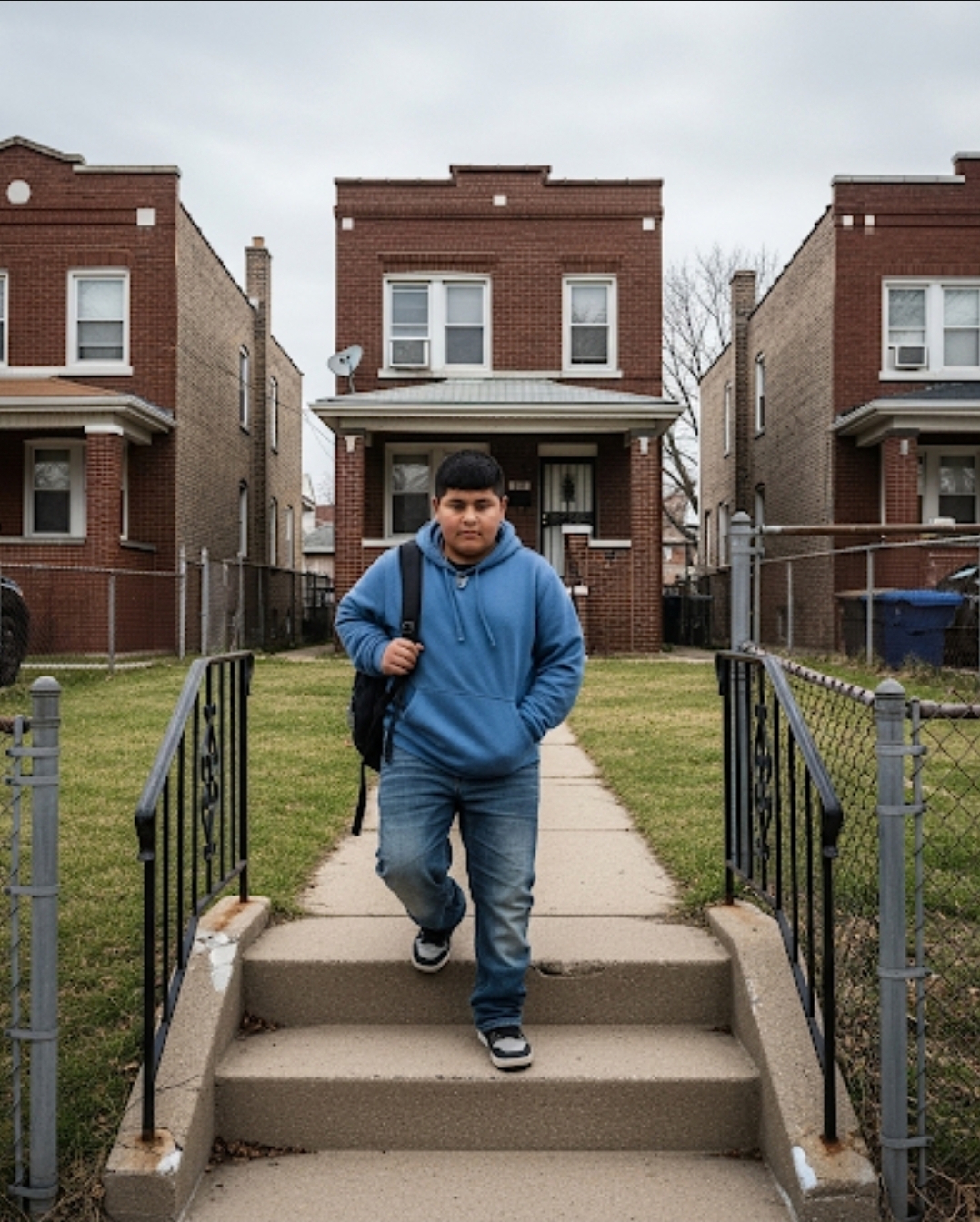
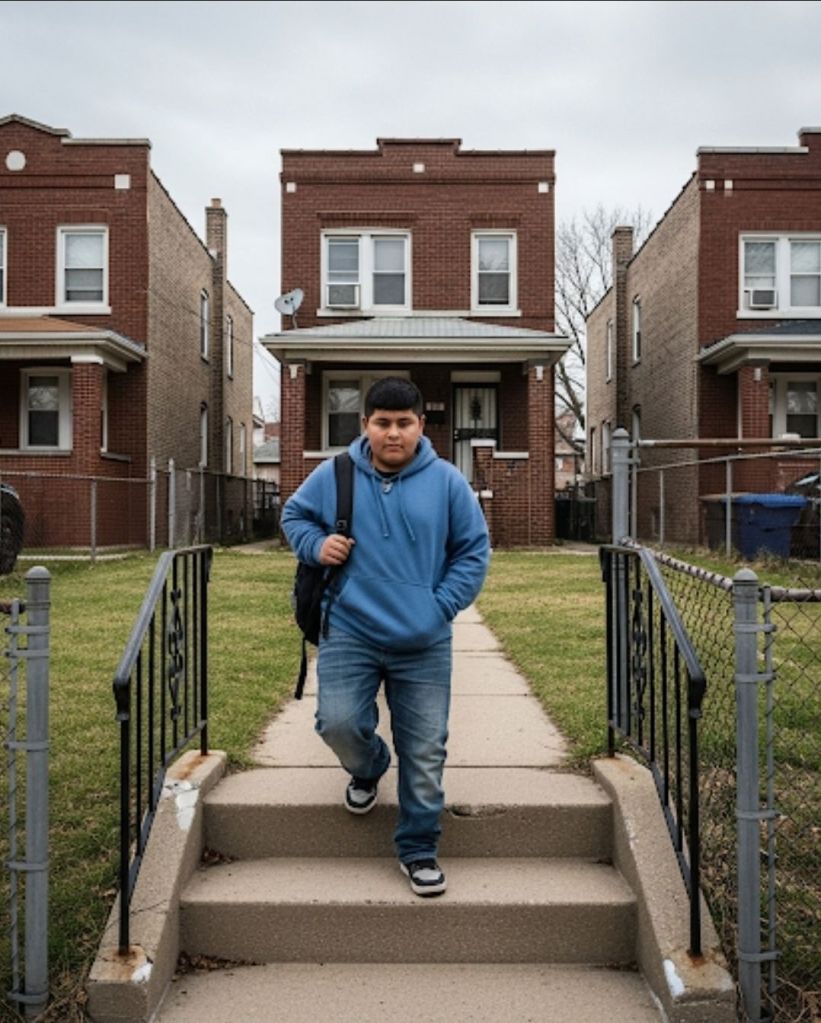
On the South side of 51st street a couple blocks West of western Avenue lived a young Mexican kid. He was maybe 25 years old or so. I told him that I lived a couple blocks away from there at 5005 South Artesian in Chicago back in the early 90s. He said that it was a dangerous neighborhood. I told him that it was a nice neighborhood when I lived there. The alderman lived down the street from me North one block. Across the street from me was a really beautiful Italian girl that always tanned out in front of her house. Two doors down from him, about 4 doors from the corner, lived a kid a couple years older than me that played guitar like I did. One door South of me were these glam rock band guys that played guitar on the lower level of their house. Behind our house, from the alley, you can hear some older men play music in their garage. They were a blues band. Everyone in the neighborhood was white for the most part. There was a Mexican family at the South edge of the block. A bunch of Mexican youths would always sit on the front porch and steadily watch you walk by. Every now and then they would throw big Mexican parties while they blasted their Mexican ranchero music loud enough that you could hear in the house. We did not have central air, so all the windows were open, and you heard everything outside. White prostitutes used to walk up and down Western Avenue, but they were rarely seen. It was a nice and clean neighborhood. It was really quiet for the most part. We had everything we needed there too. On the Northwest corner of 51st and Western used to be a Butera grocery store, now a family dollar. There was a VCR video store and Nintendo game rental store on the Southwest Corner of 50th and Artesian, I believe turned into a Mexican joint. There weren’t any taco places in the neighborhood when I lived there, but now there’s a few in every direction. This kid told me that the neighborhood became really dangerous at a time. Latin gangs filled the streets. Shootings and robberies were frequent. North of 51st street had become the more dangerous side, but the South side where he lived was a little more tranquil. He stays home and plays video games now because he is used to not going outside. He graduated from school in the year 2015. He went to Curie high school. Curie used to be a nice school, but Bogan to the South was even better than that. I got accepted to both, but my dad sent me to De La Salle instead around 1991. He said that Curie had become a dangerous and bad school. Kids were forced to cross the street at the intersection because kids were getting killed j walking across the street from the train. He said that they even had race wars in the school. Black kids against Mexican kids. It felt like near a hundred kids outside fighting sometimes. He never participated in the fights, but he remembered them well. He believes the school is getting safer though since he attended. There was a teacher in the school that was in the SD gang. He and his friends were Latin Kings. The teacher started throwing gang signs. Nobody had him as a teacher, so they treated him just like anyone else. They ran across the street and started fighting him in front of the dollar general store. It was dangerous at school and at home in the neighborhood. One day after school, on his regular 20 minute walk home, he was robbed with a 45 pistol to his head, demanding money. He was safer in some parts of the neighborhood than others. Although he did hear shootings quite frequently at night. There were “two six gang members” on one side, and Latin Kings on the other side. Constant battles. He witnessed a Latin King get shot in the neck across the street from his house.
He lived in Bridgeport for a while. Said that it wasn’t too dangerous in that neighborhood. 31st or 33rd street near Morgan was one of the areas to avoid in that neighborhood. You want to stay away from there or keep an eye out. He said that 51st and Western was more dangerous than Bridgeport. 50th and Western was a nice neighborhood at one time. The craziest times back then were when the biker guys used to throw parties on the center of the boulevard. There were a lot of bars on the West side of Western Ave. That’s where the biker guys came from. They would bring games for kids, carnival rides, and beer tents, and loud classic rock music blasting. I went there a couple of times and hung with the locals. I didn’t know anyone there, but I was welcomed to sit with some bikers and their families on the picknick tables that they brought onto the grass. Hopefully the neighborhood gets back to that level of safety and social bonding.
A third generation German descent girl has her sister live with her on the Western end of Chicago. She’s a waitress. Her sister doesn’t work, rather she screws around with various men from the Internet and does various drugs that make her not so easy to live with.
Before she let her troubled sister move in with her, she fell in love with a guy in Chicago who moved with her to Texas. It didn’t work out, so now she’s back home to the Chicagoland area.
She stares into this distance quite often. She’s really sad. She’s been sober for years now, but has a hard time dealing with life on life’s terms. She seems like she still takes some kind of drugs or she hasn’t slept in weeks.
Nobody at her job at the restaurant understands her. People in Chicago sometimes only seem to be into themselves and don’t care about your problems, since everyone has problems of their own, and they let her know that every time she wants to rant or use her problems as an excuse for a delinquency at work. She said most of the cooks are black men and the waitresses are white girls who get it on regularly with the cooks, and she hinted that she feels unwanted or not needed.
She takes the bus to and from work. I spoke to her in the rain while she was carrying groceries home from the store after work. She’s skinny and not bad looking. But she seems like she’s under a dark spell of some sort.
An older guy that now lives in Garfield Ridge gave me a five hour speech about his time in Chicago. We grew up in the same neighborhood, although he moved out of his parents house by the time I was born, actually about a year after. He says there were no drugs and gang problems back in those days. He said his drug dealer neighbor at his current location in Garfield Ridge was killed not long ago in the apartment next door he said.
I told him that he lived in McKinley at the same time my dad was dealing heroin and other drugs in the neighborhood. They used to shoot up bars back then I heard. Tommy Rapp, Smiley, and all those other guys who ran around with my dad were bad news back in those days, how could you say there was no drugs back then?
He said the drugs and crime were nothing like it is today. His brother’s wife got stuck up at gun point a few years back in the old neighborhood, so they were forced to move out of Chicago. White flight.
He said that he never goes out after dark in the neighborhood. It’s not safe in Garfield Ridge anymore. It was rough back in the day, but now it’s worse.
He remembers when the street signs of Chicago were brown and yellow. There used to be a bar in every cross street in McKinley Park. It was a happening neighborhood. A deli on every street, a tavern, candy stores, bakeries, and people all over. Nobody was getting shot and killed like they are today in Chicago.
There used to be a milk delivery guy that lived on the 37th hundred block of South Hermitage. At Winter time, the kids used to skitch the back of the milk man’s truck when there was snow and ice on the road. Once a kid skitched onto dry ground and fell to his death. That’s the only one of his friends that died in the neighborhood when they were young.
They used to swim in the McKinley Park pond. Later in life he worked for the city and they found dead bodies in McKinley and Marquette Park ponds. People were killed and dumped in the river during the 90s and 2000s. They found a lot of bodies, but perhaps didn’t find them all.
There was an old cross eyed German barber on the north west corner of 36th and Paulina that he used to get his haircut from all the time. I told him that I used to get my haircut from him when he was already very old. He said that once, his friend made fun of the man’s eyes, and then they got skolded in foul language for it. He used to run around with some trouble makers that he went to school with across the street at the Nathaniel Green grade school on the north east corner of Paulina.
He remembers Mary and Sisals bar on the corner. Another bar on Ashland was one that everyone stayed away from. Some parts of the neighborhood were known to start away from in bars.
He remembers Marquette Park area had a happening area on 69th Street. He says that the area made 69th a one way street towards Western ave so that the black people East wouldn’t come through. The last bar on the street at Artesian and 69th was another one of those rough bars. I’ve interview others that hinted towards the idea, that they stayed away from it. There were near 20 bars on that street in the matter of four blocks. All the bars on the street were of live music, food, pool tables, good times, and people dressed up to be there, but the last bar on the eastern end of the street was populated with construction workers and mechanics who were still in their work clothes. Sometimes the black prostitutes would come walk to the bar to order beer to go, because back in the 70s in Chicago, bars sold beer carry out. The prostitutes would go in there to let the guys know that she’s available in the area. A guy would have interest towards her, then follow her out to have sex in the car.
A friend of his did that. Although it was frowned upon to have sex with black people in those days, so he took her to a culdesac in Marquette Park and did his thing with her there. He fell asleep in the car and the prostitute robbed him while he was sleeping nice next to her. In those days, the front seat of a car was huge and long in length because they were a bench and not bucket seats. The cops woke him In the morning with his dick hanging out. The cops asked what he was doing naked sleeping in his car in the park, he said that he fell asleep while he was jerking off. A person could pay off some cops back then to leave you alone, but he didn’t have his i.d. or wallet anymore, because the prostitute robbed him. So the cop took him to his brother’s house, to where the brother gave the money to pay off the cop.
If he was young again, he would probably go see the guys at the bar like he did in the old days, but most of those guys are dead now and the bars aren’t what they used to be, plus there’s so much crime these days in 2025, and not so many bars to hang out at like it used to be.
My dad claimed to be one of the first Mexicans to live on Paulina Street in the 1970s. He used to deal weed, coke, and heroin, running around with another Mexican guy who moved in down the block around the same time. Life was different in McKinley Park back then. Bars lined almost every cross street, and the neighborhood was said to consist mostly of taverns and funeral homes. I was the last in our family to live there, staying until 1995, when it was still a somewhat nice and safe neighborhood. One summer day in 1995, I was walking down 35th Street with my girlfriend, Lana, to get some food. About five or six Mexican guys were hanging out in front of an apartment building on the north side of 35th Street, between Honore and Wolcott. As we passed on the other side, they shouted at Lana, saying things like, “You need a real man,” among other remarks. She flicked them off, and I followed her lead. The neighborhood was beginning to change for the worse at that point, with gang members moving in and boldly yelling obscenities on the once-quiet streets. America still felt quiet and peaceful on the streets during those years. Overpopulation and heavy traffic didn’t start until the large influx of Mexican immigrants began moving into Chicago. I miss those days, especially the empty streets on Sundays. Recently, I met a Mexican woman who couldn’t speak English but said she’d lived in America since the 1980s. She told me she lived at 37th and Wood Streets. I shared that I lived just a couple of blocks away in the 1980s and 1990s. We were excited to connect and reminisce about the old neighborhood. My Spanish isn’t great, but we managed to talk about many things—she had to rephrase often since I’m better at speaking than understanding it. She described how beautiful the neighborhood once was. She moved out about 15 years ago and has daughters. One of her daughters was best friends with some of my neighborhood friends. She took my name and phone number in case her daughter wanted to reach out—though it wasn’t necessary. She often spoke with her daughter’s friend Claudia, whom I used to hang out with in grade school. We both missed the old neighborhood. She said it was once a nice, close-knit community but became too dangerous due to gangs and shootings, forcing her to move.
He moved out in 1989. Moved to Arizona. He keeps in contact with a few friends in the old neighborhood. He can’t believe how bad it has become in the Chicago Little Village neighborhood. He says that there was trouble before, but not like today. There used to be a lot of Polish and other European descent people in Little village by the 1980s, but it was mostly white with little bits of Latin Americans moving in. He loved the food. He remembers all the Polish delis and bakeries. He would name off a few foods that he liked. “Man, your don’t know what you’re missing if you haven’t tried it. I miss those places. The food was so good back then”.
He said that the white kids would sometimes pick on him. He had friends there, but sometimes he would run into the white gangs that would sometimes be around. “The two-two boys, the cobras,…” and others. Although he still misses the old neighborhood and how it used to be.
Being in the little village neighborhood before it became all Latin, it was a very safe neighborhood. He said that they didn’t call it little village, it was North Lawndale. It was a very safe and clean neighborhood. He missed the food and the people there, but not the trouble makers of the area.
I started speaking with an older Mexican woman that lived in the same neighborhood. She agreed that the food was really good and that the neighborhood was really nice. But she didn’t agree with the first guy I spoke with. She said that Little Village was mostly Polish in the 60s and part of the 70s when Mexicans started to take the area, pushing the European neighbors out.
She said she misses the old neighborhood and good food there. Her aunt worked at the furniture store that’s in the picture attached to this document. She opened a Mexican restaurant in the 70s with her husband in the area.
She said it was a nice place. But in the 60s when they first moved in, the white gangs burned their garage down, because they didn’t want the Mexicans to move in. The Mexicans moved in anyways, and all the European types moved out.
Shirley is almost 51 years old. She grew up in the Austin neighborhood. A couple of her daughters live with her. She says that the neighborhood is not what it used to be. She advises me not to walk around the Austin neighborhood without backup with me.
I asked her how she liked living there now. She said she can’t wait till she moves. She was hearing gunshots last night. She says that she thinks they were gunshots but nowadays she doesn’t really listen for them because they’re so often. She said that she’s numb to it already. She can’t wait till she moves out of the neighborhood I’m going to a safer neighborhood.
She says that people aren’t as respectful as they used to be. Kids are dangerous now and very disrespectful. She just wants to move out of the area. Says that she’s been there too long.
I told her that I had heard from a few old timers that the Austin neighborhood was really beautiful back in the 1950s and ’60s. Shirley agreed with me. But I told her that the neighborhood was coming up and getting better especially north of Chicago avenue. She once again agreed with me.
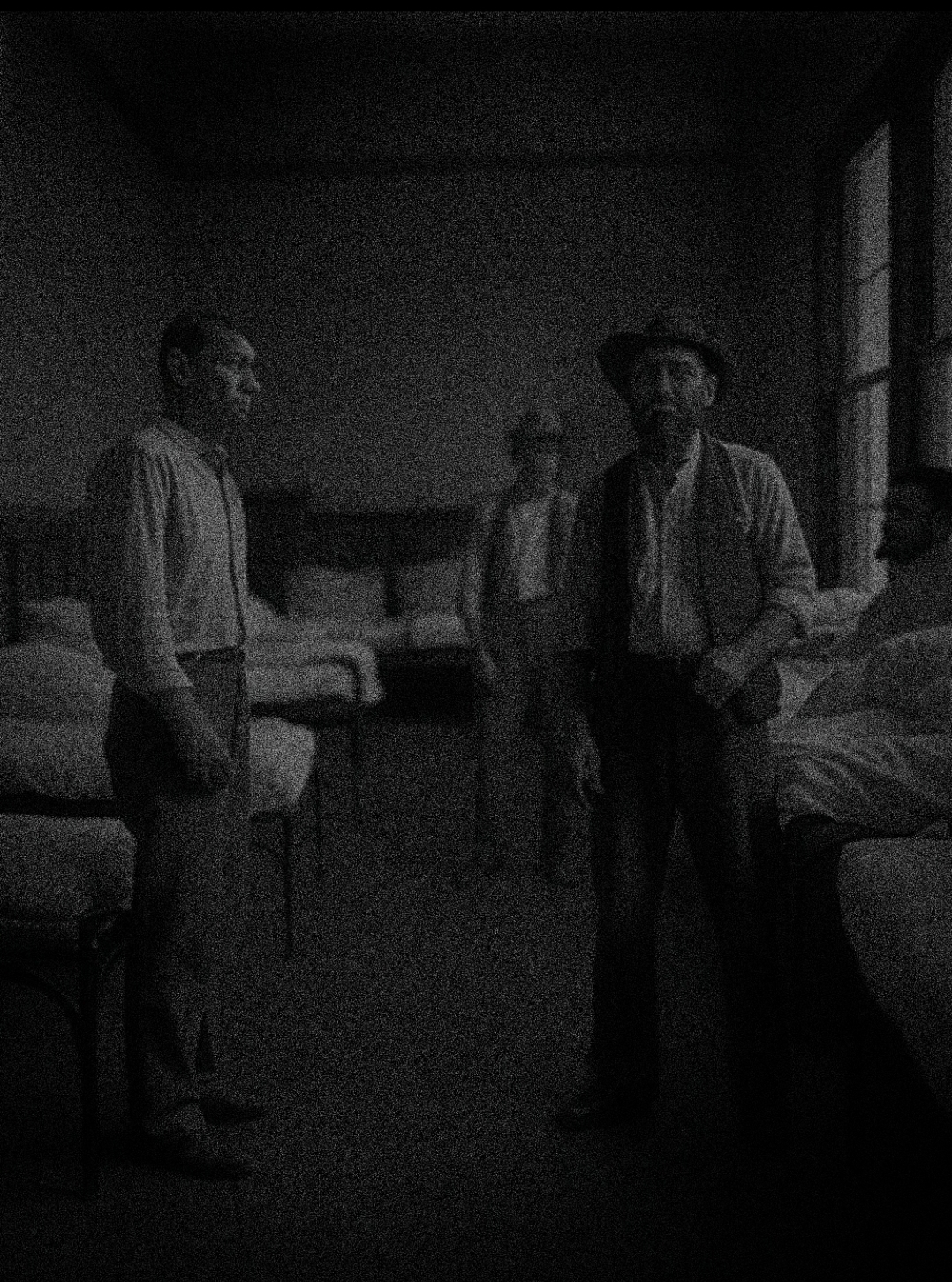
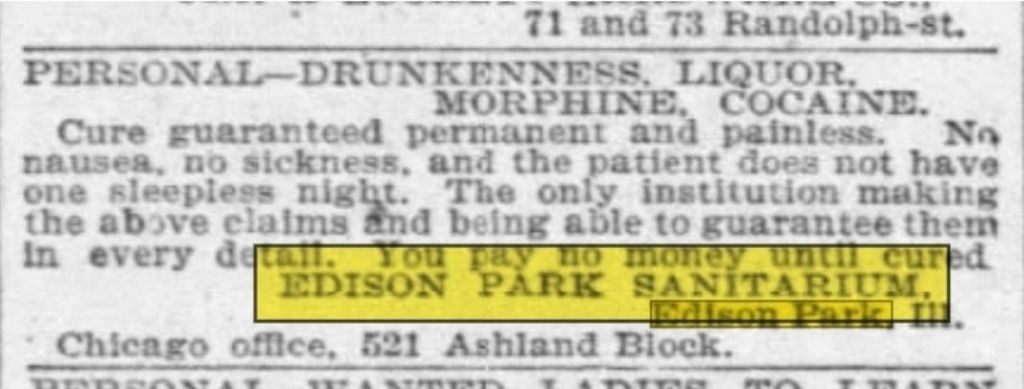
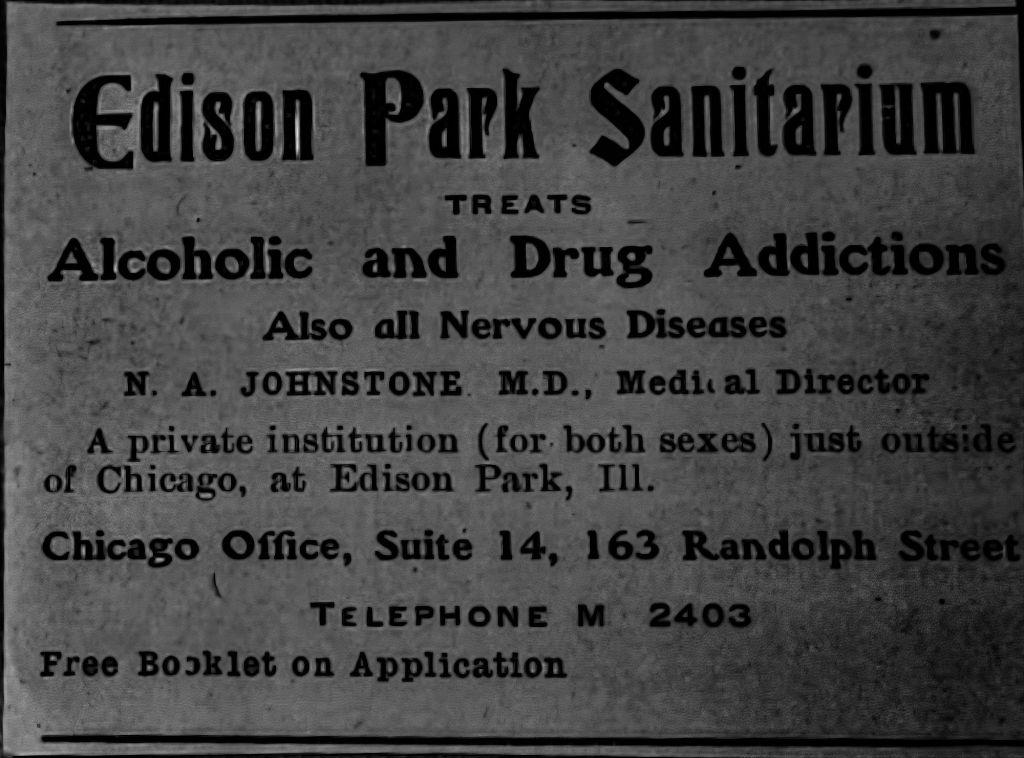
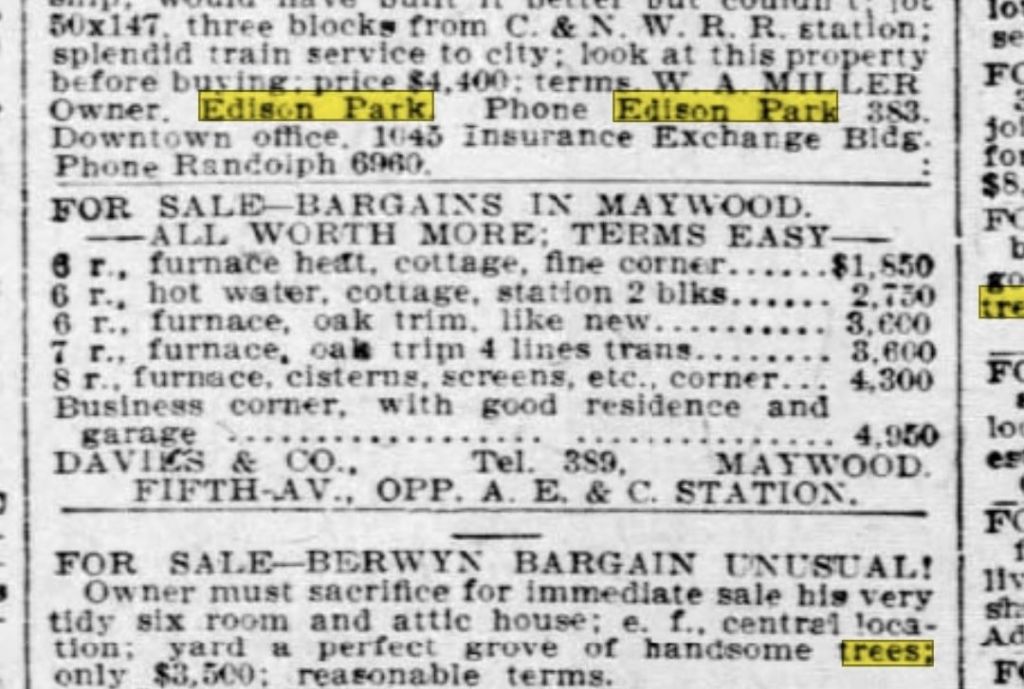
Streets were once lined with fruit trees and evergreens that sat in front of lots and houses that sold for a few thousand dollars. In the year 1912, a bungalow sold for $4,400. It was the first electrified area of the Chicagoland area. They even had the first streetlights in the area. Edison Park had been a relatively young town that was annexed by Chicago just a few years prior. But amid those happy homes sat a building that temporarily housed people who were alcoholics or drug addicts who wanted to be free from the addiction. The Edison Park Sanitarium was filled with vagabonds, drunks, and drug addicts, whose lifestyles were marked by criminality. The hard wooden floors smelled of varnish, cleaning supplies, and whatever sickness flew from the bodies of the people who stayed there. Some men were committed to the facility. Some of them had the shakes from withdrawals. A lot of people had died in their beds while trying to overcome the disease, since medicine wasn’t that advanced at the time. Most of the mortality occurred in severe cases, while the mild cases typically recovered. The sanitarium offered a cure to these addictions free of charge, but if the patient survived and were able to move on with their life, they would then be charged. Medical facilities at the time were sometimes quite harsh. People believed that if they wanted to improve, they would have to endure the type of punishment that involved dealing with the staff. Heroin and morphine addicts seem to have more unpleasant withdrawals than alcoholics. A lot of the people in the Edison facility were drug addicts, among alcoholics. Morphine and heroin users would vomit and defecate on themselves, with uncontrollable diarrhea. The facility smelled terrible, which made the staff resent the place and having to deal with addicts. It was a harsh environment marked by frequent brawls and arguments with the staff. Everyone was chain-smoking at their bedside while dreaming about how to either get their next fix or become healthy. Married men would have sex with the widowed drunk women who were in the facility. Some women made their rounds with men, stirring up jealousy, which resulted in a lot of bloodshed and bad vibes that the staff tried to keep under control. Some relationships lasted for a while outside of the facility, but the time inside the joint was something they would never forget. A majority of the people were advised to go to the facility. Their minds were there, but their hearts were still in need of the drunken state. They were cured upon their release, but many flew back into their bad habits even harder. Wife beaters, guys who couldn’t keep a job, suicidal folks, widows who tried to drink away their sorrows, any many others were part of this facility, along with criminals of sorts. This group of people, some looking for help, others were there from suggestion. They all adapted to their habitat, while some contributed to the creation of the environment more than others did. Some alcoholic women would piss on themselves all the time. Other guys made the place smell like a cross between diarrhea, puke, and sweat. The staff hated being there as much as the patients did, turning the place into a type of prison with rules that made no sense. Some of these people considered the time they had there as a dark moment in their lives, serving as a conduit into a new life plan, while others became so resentful that they couldn’t wait to return to street life, leaving madder than when they came in. With the start of Alcoholics Anonymous and other similar programs, fewer people attended the facility, the line dwindled. It eventually closed sometime in the mid-20th century. The place just shut. Doors locked. Stories stayed. Edison Park remains still a very nice neighborhood that once held this facility.
A youth from the back of the yards neighborhood lived there for half his life, originally from the Little Village neighborhood. He said Chicago is dangerous. “I don’t think it’s a good idea for you to walk around here.”
He says that he hears shootings every now and then in the back of the yards neighborhood. I told him that I wanted to interview people with my camera, but he refused to be on video. He advised me not to walk around in the neighborhood on the main streets or in the neighborhood. He says he takes Uber everywhere he needs to go because it’s so dangerous there, he doesn’t want to walk anywhere unless it’s going straight to the bus. He advised me to show up at some Street event to where there will be a lot of people that may deter gangbangers from doing anything. The event passed. It’s a summer event.
On Thursday two men were shot on 47th and Justine Street. 47th is a dangerous path it seems. A 37-year-old man was shot in the head on Tuesday near Ashland and 46th Street. A kid robbed a store with a gun on 51st Street. A house was raided on Ashland and found six guns with kids sleeping upstairs. On Sunday, 51st and Hermitage a guy got stabbed out in front of church after Mass at our Lady of Guadalupe, apparently the guy was at church and when he came out of church some dude tried to rob him, but he got stabbed instead. The criminal may have been a neighborhood youth that had been loitering the week before.
Stay away from the Back of the Yards neighborhood in Chicago. This is a place where kids are afraid to go outside or avoid going to certain streets or going out after dark.
Have you ever wondered what shapes the essence of a Chicago neighborhood? What was it like then, and is it still gang infested now? Who were those Lithuanians living in the Back of the Yards neighborhood in Chicago, why did they leave? Now Latin Americans(and some undocumented ) shape the future. All the taverns, brothels, bath houses, and bakeries that once numbered in streets between the residences of the neighborhood are mostly only in the dying memories of part of the fading past. But some of the old, gritty structures still stand. The old bricks once housed sweat and tears, currently replaced by blood and fear, of the brown eyes peeking through the shades of the window. I want to see the people and document their stories. I will capture the history and also record current stories for future Chicagoans to uncover.
Driving up Ashland to 47th, then West to Wood street, and North. Keeping an eye out for some old store fronts or taverns that had been shut down, but all I seen in the streets were Mexican people in various areas. I was fed up with driving aimlessly, so I stopped and asked a guy who was with a group of other guys hanging out on the street for insight. I asked him if he knew of any historical spaces in the area or even the historic gate in the back of the yards. He was of some Latin descent, but his eyes were almost silver. I couldn’t really notice because he kept shifting his head and eyes all over the place. He almost seemed to think it was funny that I asked him the question. He may had been looking around to see if I had back up somewhere or if I was a cop. He was definitely on some type of drugs. He may have been a gang member with the others. They let me leave instead of killing or carjacking me. He must have thought that nobody was crazy enough to stop some drug addict gang bangers in the streets for neighborhood insights. He denied having any insight of old buildings in the neighborhood. He pointed me in the wrong direction to the historic gate of the historic stock yards that the neighborhood is named after. He may have been more freaked out than I had been, but for different reasons. His eyes were scanning down the street and at all the cars, while his friends kept their eyes steadily on me. There were about 12 incidents this week in the back of the yards near the same streets that I drove down. Some Latin nurse girl was doing Uber for extra cash in her neighborhood, and a group of guys used a fake account to have her pick them up. They stuck a gun into her side, then demanded that they drive. The Latinos then demanded that she go buy them some food. Near 47th and Kedzie, they had her run into the taco joint while they stole her car and left her at the taco place, which luckily was not far from where she lived. There had been at least 3 carjackings in the back of the yards this week, a huge cocaine bust, and several people getting shot or killed near 47th Street this week. I grew up a mile away from this place, now I am here to capture the history, but it’s so darn dangerous. Other incidents involved armed robberies where nobody was shot this week. There’s also an amount of carjackings that go unreported. I drove through this neighborhood as if it were 1990 still. I want to record people’s lives and the history of a neighborhood while also making history for others to read about. I’m not interested in recording the crime of the area, but sometimes that one aspect overshadows all of the other things and the essence of a community and families in a neighborhood.
 The Essence of Chicagoland Areas